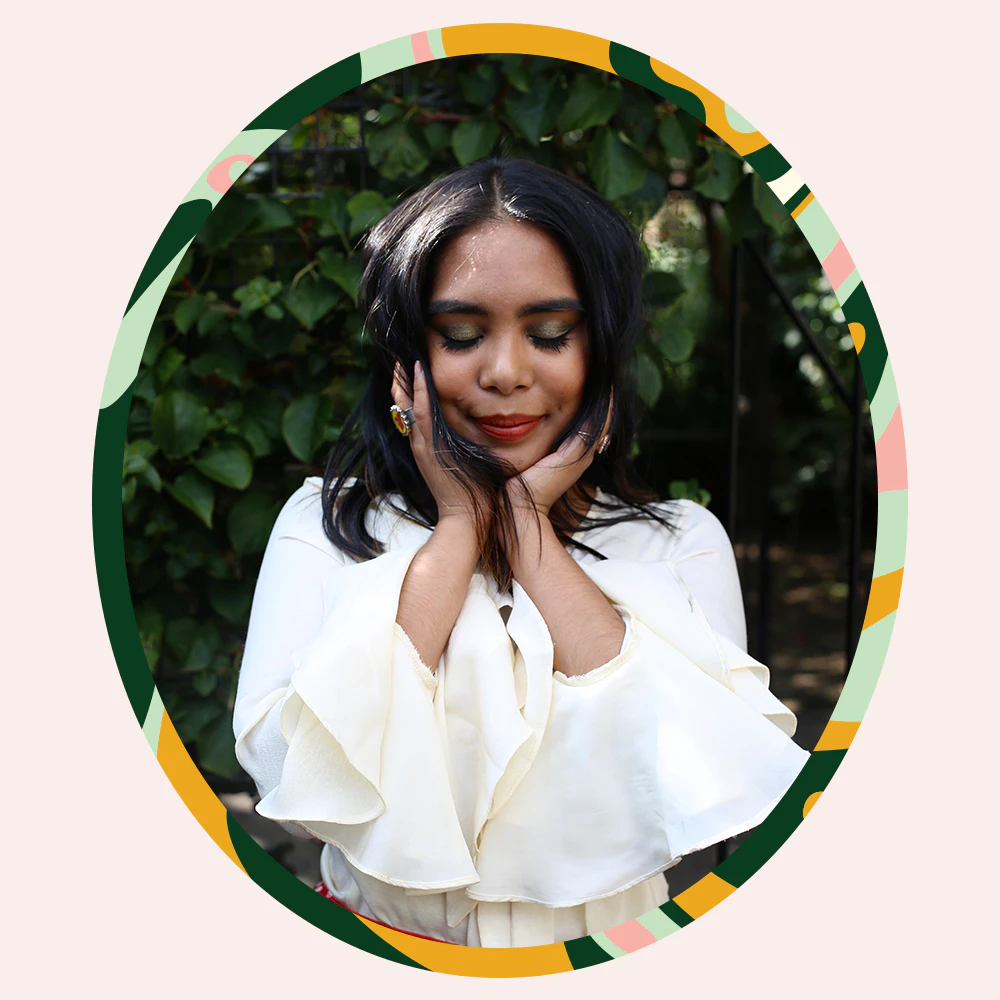
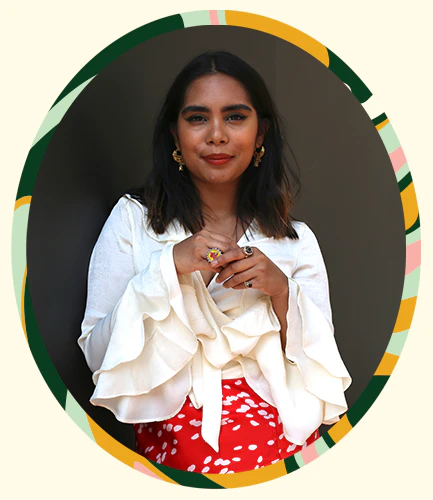
Tahmina Begum is the editor of XXY Magazine, and a journalist who writes on all manner or subjects—from fashion and food to the body and mind.
She caught our eye a while back thanks to a piece she wrote on menstruating during Ramadan, the annual month of prayer, reflection and fasting intended for fostering a stronger relationship with God. We know that everybody is different, and there’s a difference in how women experience menstruation across cultures, too.
Tahmina herself hasn’t had her period for 2 years and is working with a gynaecologist to try and get to the bottom of it. She’s dedicated to separating fact from fad, which means she’s skeptical of Goop, rolls her eyes at turmeric lattes and has recently penned a think piece on how women of colour are reclaiming natural beauty essentials—like clay, coconut and avocado—that modern wellness now claims to have invented.
Much like everyone at Daye, Tahmina believes there’s great power in knowing and understanding our bodies. We caught up with Tahmina to ask her about how she reconciles culture, faith and research to help her be in tune with her body and take charge of her health (on her terms).
Do you remember your first period?
I was nine and at my nani’s house with my aunt. My parents were away and were both told when they came back from their shopping trip. The look of “oh gosh, she’s now a woman” was in the air which now looking back, nine is very young and I can understand why they’d feel sentimental about their daughter growing up so fast.
I hadn’t spoken about periods yet, I was in year 4 so was yet to learn about them at school but because I was young when I got the first period I was given a crash course by older aunties, cousins, my mother and grandmother. I’m very blessed to have a big family.
What’s your relationship like with your period now?
I haven’t actually gotten a period in nearly 2 years. I’m currently working with my gyno to find out what the situation is but the process is long and hard and can take a toll on my hormones.
If you don’t mind us asking, do you use tampons? As a Muslim woman, is that a cultural consideration when it comes to period care?
I have used tampons in the past but generally, when I got periods, I did prefer pads. Maybe it’s something to do with what you’re introduced to when you first get a period? Pads were always at home—there was no shame in them being in the bathroom. From a young age, I was always comfortable even telling my dad the description of sanitary product I’d need.
It’s not necessarily a cultural consideration if you’re Muslim—that’s up to you and your bits—but for many poor countries around the world, who happen to be Muslim too in some regions, tampons are just unheard of and difficult to change and wear than thick pads.
You recently wrote a piece for about Ramadan, and how you looked forward to it each year as a time of reflection and wellbeing. Can you expand on that idea a little bit?
Ramadan is literally my favourite time of the year. Even though I’m a foodie (and by that I mean, an eater). I was just thinking yesterday about how much I miss Ramadan.
Fasting for Muslims is not just the fast of the mouth but of the soul, mind, body, tongue, basically everything. You’re supposed to only take in information beneficial for you (soz, Love Island) and you can’t get angry or talk behind someone’s back. It’s a refresher course on manners and unlearning habits you might have obtained in the past year.
What happens when you get your period during Ramadan? Is it okay to break fast while you’re menstruating?
A period breaks your fast instantly. You can’t fast if your body and mind are also going through something else, such as being ill or you need to take medicine for example. Your body is already doing a lot when menstruating so you’re exempt from fasting—you make up for the fasts later in the year.
Are there any sources you use for information as a Muslim woman?
I adore Amaliah. And Azeema Magazine and Muslim Sisterhood. Platforms catered to Muslim women by us for us (though really for everybody). I like listening to Nouman Ali Khan’s podcast, the Amaliah podcast, where they talk about everything from social commentary to not believing in the hype to meditation. My cousin recommended the My Dua app which is actually super useful. It’s full of ways to essentially to say thank you for little parts of your day.
I also make it a point every Ramadan to read books only by Muslim women, but that’s happened to carry on into the rest of my year (I’m not complaining). A few favourites: Mariam Khan’s It’s Not About The Burqa, Asma Barlas’ Believing Women In Islam and My Past Is A Foreign Country by Zeba Talkhani.
What are some of the myths you see about women's health, time and time again?
My god there are so many! It makes me so, so angry! First of all, we all need education on gut health and how that truly shapes our bodies and minds. And we also need to unlearn all this wellness fraud—our bodies are amazing, I don’t think we need 70,0000 jars of organic peanut butter in the morning to feel better.
What really frustrates me is the lack of research that goes into women's health, so when I talk to experts, there’s a grey area sometimes because the work hasn’t been done. When will our bodies—which do so much—be valued?
What really frustrates me is the lack of research that goes into women's health.
What are some of the most exciting stories in women’s health that you’ve come across recently?
I’m finding the use of spices and herbs to help our mental and physical health interesting. For example the rise of ashwagandha.
We see health as having 3 pillars—physical, mental, soulful. What do you do to nurture those three pillars?
I used to be proud of getting by with only 4 to 5 hours of sleep basically all my life but this year it caught up with me, so now it's about getting those 7 hours in. Similar to the essay I wrote for #ComfortZonesTheBook, it’s knowing when to push and pull and listening to your own body, mind and soul.
There’s always something trendy happening in women’s health but it’s not possible for all women to fit within those trends. Our bodies are different every day, so how can we be the same as everyone else and abide by what someone else is recommending for our bodies?
When will our bodies—which do so much—be valued?
I also think being grateful helps me be present and fulfils all these pillars. It makes me utilise the abundance I truly have and take a step back. When I’m grateful, I make the most of my body so I work out, I’m happier and I genuinely feel like I’m here and not living for the past or future.
Of course, I’m Muslim so speaking aloud to God five times a day to break up my day also helps. It may sound hippy-dippy but there’s power and mindfulness in prayer and looking beyond yourself.