


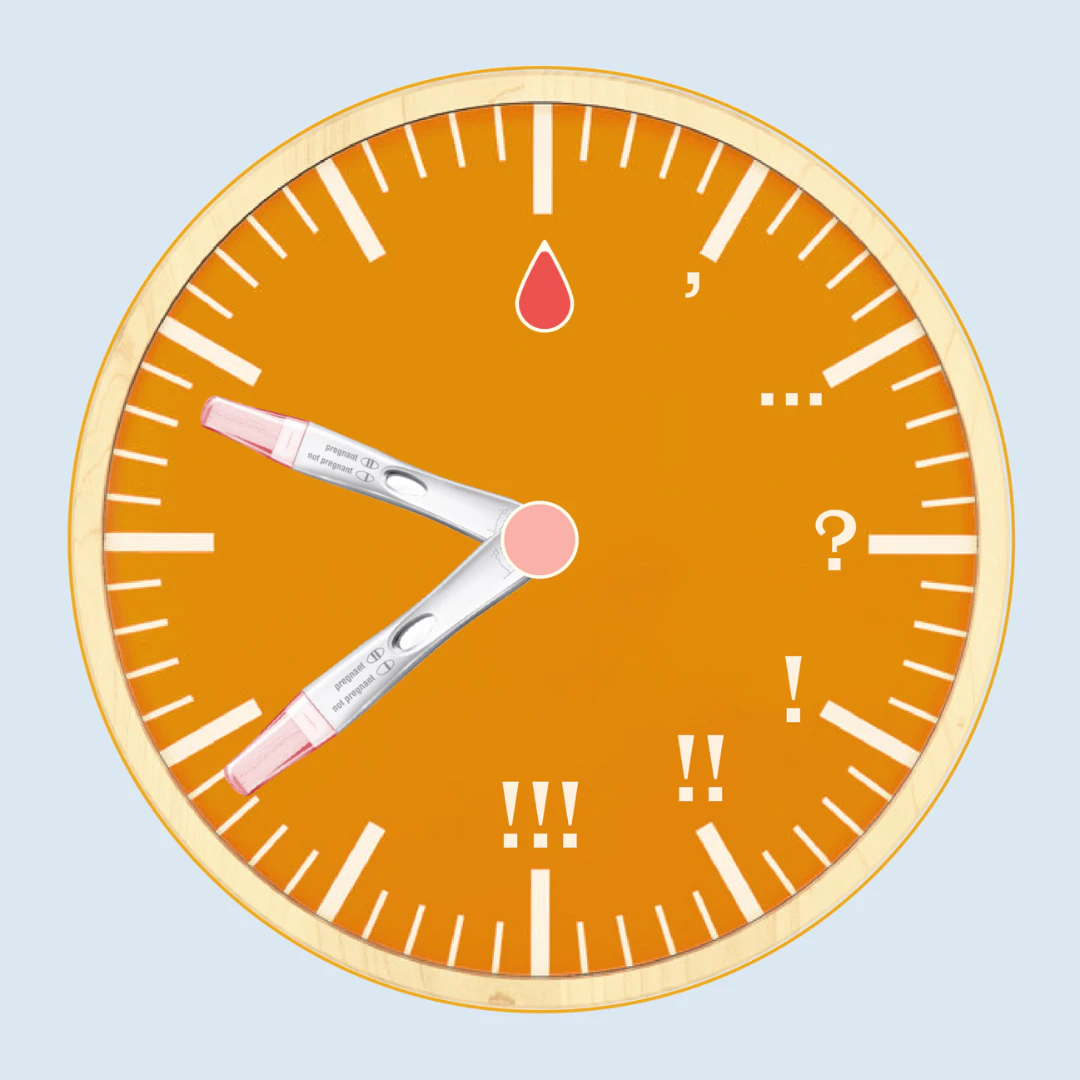
Go on, then. How many times have you noticed the sneaking absence of the first bright red streak that announces the start of your period? How often have you mentally counted up the days and noticed that something can’t be right; that it’s definitely been longer than usual since you were last curled up in the foetal position, pressing a hot water bottle against the period cramps that racked your body?
And how often have you fumbled a pregnancy test out of its packet – fingers shaking, breath shallow – only to find that you’re clearly not pregnant, and then subsequently been left thoroughly confused and slightly panicked as to what could possibly be delaying your period?
Likely enough, we’ve all been there. Late periods are commonplace – in fact, the absence of periods is known as amenorrhoea – and you’ll be happy to know they can happen for any number of reasons. So, without further ado, let’s take a deep dive into periods and punctuality (or lack thereof).
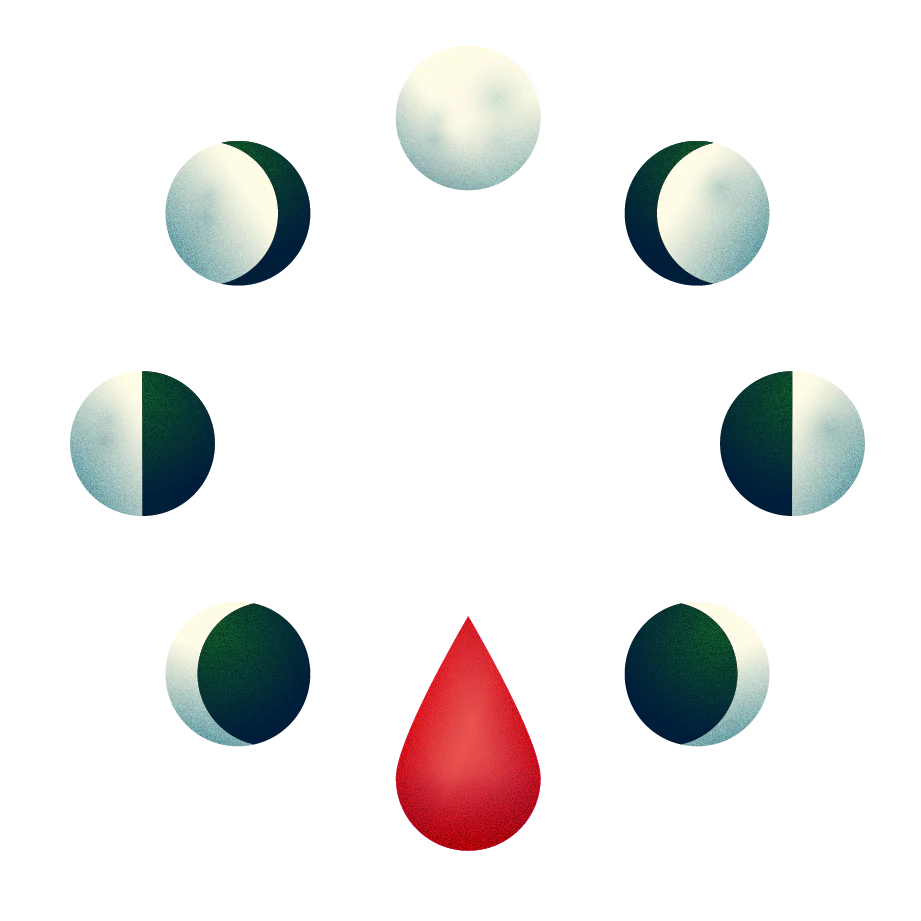
What is a typical menstrual cycle?
May as well start with the basics – we can’t know how late a period is until we know what we should usually expect. And that’s where Dr Jayne Ballinger de Quispe, Associate Clinical Director at Bupa Health Clinics, comes in.
“The length of a menstrual cycle varies, depending on the person,” Ballinger de Quispe explains. “A full cycle is classed as the time between the day of your last period to the day before your next. On average, each menstrual cycle lasts around 28 days. Some people have cycles that are shorter, or longer – anything between 23 and 35 days is normal.”
What defines a late period?
“If your period is classed as late, it means that it’s started five or more days after a normal menstrual cycle would,” continues Ballinger de Quispe. “The gap between each of your periods can sometimes vary. If this happens regularly, then you have what’s known as an irregular period.”
So; what are some causes of a late period (that aren’t pregnancy); otherwise known as the reason we’re all here? Ballinger de Quispe lists various factors that can lead to non-pregnancy-related late periods; and varied they are. There’s a vast range of (non-exhaustive) late period causes that can impact women and AFABs of all ages, backgrounds and life stages; so let’s get down into it:
1. Stress
Have a quick Google of ‘causes of a late period that aren’t pregnancy’ and this one will jump out at you every single time, without fail. Seriously. We’re not joking.
Take Parents, for example. They quote Anuja Vyas, M.D., FACOG, who explains: ‘Emotional distress can affect the region of the brain that controls the pituitary gland, which regulates the hormones that stimulate our ovaries’.
As you’ll no doubt be aware, our ovaries release eggs once a month, to be taken up by a fallopian tube; and that’s what ovulation is. No ovulation, no period; so, if the hormones that impact our ovaries are less regulated than usual, that can lead to a later period than usual.
2. PCOS
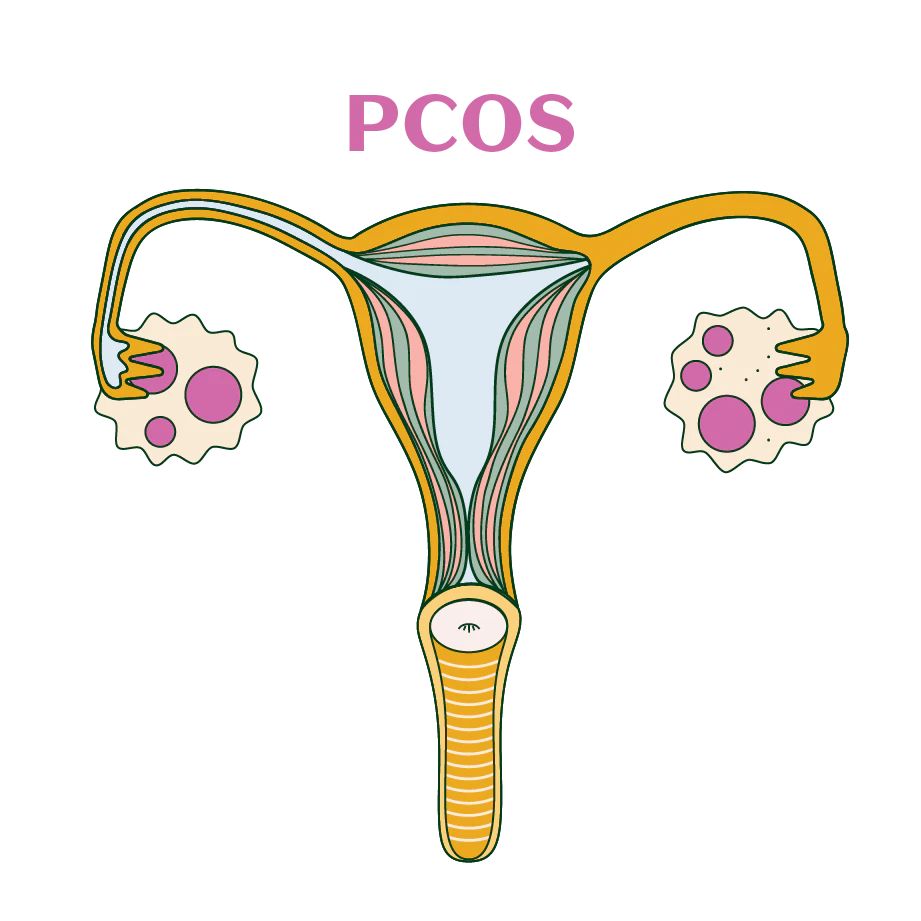
Irregular periods are one of the three main features of polycystic ovary syndrome; and, again, Ballinger de Quispe is not alone in highlighting it as a key cause of a late period when pregnancy isn’t to blame.
Healthline, too, calls attention to this common hormonal condition. ‘PCOS is a condition that causes your body to produce more of the male hormone androgen,’ they say. ‘Cysts form on the ovaries as a result of this hormonal imbalance. This can make ovulation irregular or stop it altogether’.
Again: No ovulation, no period. So it’s not surprising, really, that PCOS could be a key factor in why your period is stubbornly refusing to RSVP.
3. Excessive exercise
By ‘excessive’, we don’t mean weekly Pilates classes, or starting your days with a 5k jog. Verywell Health points out that ‘it usually takes hours upon hours of demanding exercise every day for these hormonal changes to occur’; but that, when they do occur, ‘extreme exercise can cause changes in pituitary hormones and thyroid hormones, which can impact ovulation and menstruation’.
More on the thyroid below; but we already know from the ‘stress’ factor that the pituitary gland essentially regulates our ovaries. So if you’re exercising excessively, this prevents your body from entering into the ovulation phase of the menstrual cycle. And, once more, we say: No ovulation, no period. Simple.
Plus, excessive exercise can, of course, lead to weight loss – and low body weight can be another important factor when it comes to late periods. It’s back to Parents’ Dr. Vyas on this one, who explains: ‘Severe weight loss and anorexia can shut down the hypothalamus’s production of follicle-stimulating hormone (FSH) and luteinizing hormone (LH) that regulate the ovaries’. Once again (but not for the last time), we’re back to ovulation.
(If you’re a little confused, at this point, about the relationship between the pituitary gland and the hypothalamus – both of which often seemed to be mentioned in conjunction with regulating the hormones that stimulate ovulation – you’re not the only one. Nursing Times has a handy explainer, though: ‘The hypothalamus is connected directly to the pituitary gland via a thin stalk [...] Many actions initiated by the hypothalamus are mediated through secretions produced by the pituitary gland beneath it’. Sorted.)
4. Obesity
As with the causes that have come before, obesity or weight gain can result in a late period due to hormonal factors; but this time, it’s oestrogen that’s to blame. Obesity can essentially result in an overabundance of oestrogen; and, as What to Expect says, ‘An overload may result in a few months without ovulation or cause the endometrial lining to overgrow and become unstable, resulting in heavy, irregular or missed periods’.
5. Perimenopause
You likely saw this one coming – infrequent periods are a textbook sign of perimenopause, the stage that occurs around 10-15 years before menopause itself (occurring at roughly age 52) – but did you know that this, too, is due to oestrogen?
Oestrogen levels begin to fluctuate during perimenopause, as acknowledged by Medical News Today – and we already know from the ‘obesity’ factor that fluctuating oestrogen levels can result in late or missed periods (though, in this case, it’s less oestrogen that’s to blame).

6. Breastfeeding
Ok – loads of fun facts associated with this one. Firstly, did you know that many people think of breastfeeding as a form of birth control? (Spoiler: It’s not. A phenomenon known as lactational amenorrhoea is only around 98% effective at stopping pregnancy, and only if it meets the following criteria: You must not have had a period; if your baby is less than six months old; and if you’re breastfeeding on demand at least every 4-6 hours.)
Another fun fact, though, is that breastfeeding resulting in a late or missed period is all to do with the hormone prolactin, which What to Expect defines as ‘the hormone responsible for breast milk production’ and which suppresses ovulation.
(On that note – it’s very unlikely, but worth mentioning that your late period could – could – also be due to a pituitary tumour. This is also known as a prolactinoma, and it secretes excess amounts of prolactin. Dr. Vyas, as quoted in Parents, says ‘people experiencing irregular periods, headaches, blurry vision, and discharge from the breasts even though they’re not breastfeeding may want to get checked by their doctor for this type of tumour’.)
7. Contraception
Bet you saw this one coming. If you’ve recently gone on or off birth control – and we’re talking all types of birth control here, including ‘pills, patches, shots, implants, and rings’ – this could well be the reason for your late period.
Hormonal birth control essentially contains the hormones oestrogen and/or progestin [a form of progesterone], and these hormones can prevent the ovaries from releasing eggs.
Some methods of birth control can thin the lining of the womb, which can stop your periods completely or make them more irregular. In addition, combined methods of birth control – the combined pill, the contraceptive patch and the vaginal ring – prevent ovulation, so you do not get a period. They have been designed to give you a monthly withdrawal bleed (to seem like a period) in your 4-7-day break (or when you take the dummy pills). It is possible to sometimes not bleed during this time but it is a good idea to do a pregnancy test as this can be a reason to not bleed during the break.
8.Diabetes and thyroid problems
Let’s start with thyroid disease. The thyroid hormone plays a major role in regulating your menstrual cycle. When you have too much or too little of it, your periods might be irregular.
‘So where does diabetes come into play?’, we hear you enquire. Well, we’re glad you asked. Parents explains that some studies have ‘found a link between type 1 diabetes and early menopause’. They add: ‘Researchers believe this occurs because this type of diabetes causes premature vascular ageing and, in turn, ovarian ageing. As you reach early menopause, your periods may be late and irregular.’
How can each of these causes be managed (if at all)?
“If your period is late due to factors like weight and stress, changing up your routine so that you’re living a consistently healthy lifestyle will help to improve the way your body functions, and may bring your periods to a regular return,” says Ballinger de Quispe. “Be sure to eat treats in moderation, get your five-a-day, take moderate exercise for 150 minutes each week, sleep well, find a work-life balance, and take time to do things that help you relax.”
We know it’s not always that easy, though. Sometimes, there are factors far beyond your control contributing to stress levels (not to mention it’s hard to get enough sleep if you suffer from insomnia, or to fit in time for exercise or a work-life balance if you work impossible hours), so it’s important to make an appointment with a doctor regardless. Firstly, because you never know for sure that it’s (for example) stress or weight that’s causing your late periods; a doctor needs to rule out any other potential causes. And secondly, because they may be able to advise on feasible ways to (e.g.) minimise stress or manage weight, and thus encourage the return of your periods.
Plus, Ballinger de Quispe emphasises that any other causes should always be addressed with a health professional to help manage them on an individual and personal basis.

When should someone be concerned about a late period?
“Sometimes, a missed period every so often isn’t down to any cause for concern or health issue,” says Ballinger de Quispe. “However, if you’ve missed a few periods in a row, or several over the course of a year, you should speak to a health professional – especially if you’re planning a pregnancy.
“Likewise, if you’re not sure what’s causing a late period, you should always speak to a health professional,” she continues. “They might refer you to a period specialist, who may recommend tests or scans to help find out the cause.”
Some final thoughts…
Firstly: The above lists of possible causes of a late period is not limited to just those. It’s impossible to go into detail on every single possible reason for a delayed period in just one article, but Ballinger de Quispe offers some more as parting thoughts:
“Periods can be irregular at the start, during puberty hormonal changes,” she explains. She adds, too, that “endometriosis can cause pain and irregular periods”; but it’s important to remember that ‘delayed or halted periods are not recognised as a symptom of endometriosis’.
Finally, we have to acknowledge the elephant in the room. You could just be pregnant! It’s worth taking a home pregnancy test (or two), just to rule out the possibility. After all, we know that birth control isn’t a failsafe way to guard against it; and nothing should ever be assumed when it comes to the reproductive system.