


Unnecessary and backward social stigma has made it undeniably challenging for people to obtain accurate and unbiased information about their genitals. Just take a look at the many myths about vaginas, which work to perpetuate misinformation, impacting gynae health outcomes and contributing to gender-based discrimination.
False messaging and fake information also invoke shame around genitals—if we are told they should be one way, and they aren’t, we think something must be wrong. Rest assured, the only thing wrong is that so many of us learn damaging falsities about vaginas and regard these myths as truth.
Let’s get to work and shatter some of the most common myths about vaginas.
The myth of the word vagina as a catch-all phrase
From media to textbooks, you may have noticed that people commonly use the word vagina as a catch-all phrase for female genitalia. This labeling is incorrect, and usually, a more accurate term for what people mean to say is the vulva, which includes the outer and inner labia, the opening of the vagina, and the clitoris. The vagina is the internal canal. When engaging in penetrative sex, the vagina is where a finger, toy, or penis enters. It’s also where a tampon fits during menstruation.
So why has society mislabeled the external genitals as the vagina for so long? Puritanical values may have something to do with it. By saying vagina instead of vulva, we deny ourselves the language needed to describe the area of our genitals that’s most linked to sexual pleasure, namely the clitoris and labia. The fact that this myth and mislabeling have persisted for decades is a clear indication of exactly how uncomfortable we still are with the concept of women, non-binary and trans folks experiencing sexual pleasure.
Another issue that mislabeling causes is that it becomes difficult to communicate when something is or feels wrong with your genitalia. It’s impossible to do so without the correct terminology needed to describe where the symptoms of pain, itching, burning, increased discharge, etc. that may be occurring.
Not knowing the right terminology can make it difficult to convey where you access the most pleasure. If you don’t know where that is, it’s harder to convey what feels good to a potential partner. There’s power (and pleasure) in using precise language.
Surely people know the correct terminology, even if they don’t say it? Turns out, not. In a 2019 survey among people of varying genders, half of Brits surveyed didn’t know where the vagina was located and couldn’t correctly identify the labia. If that’s not an information blackhole, we don’t know what is. The good news is, however, that using the correct terminology can help correct our knowledge gaps and sexual health blind spots!

The myth of the perfect labia
Labia are the inner and outer lips of the vulva. Labia in textbooks are often depicted as flat, hairless, perfectly symmetrical, and plastic pink. These anatomical guides lead people to believe that labia should be tight, perky, and symmetrical on both sides. Because of this myth, cosmetic surgery to reconstruct the labia, called labiaplasty, has been on the rise. The demand for these procedures has been on a steep, and shocking, increase in demand. From 2015-2019 there was a 73.3% rise in labiaplasties worldwide. What’s the reason for this procedure becoming more popular? Well, if people don’t have a realistic depiction of labia to reference, they might think something is wrong with their own.
People with vulvas typically do not see lifelike portrayals of their genitalia. This is why some artists have recently begun campaigning to increase our awareness of what vulvas really look like. Laura Dodsworth chose to photograph 100 vulvas up close to help us all feel more comfortable with what our genitalia looks like. Her work proves that labia can look all kinds of ways and hardly are any like the guides we were once shown. Accurate depictions matter!

The myth of the hymen as a marker of virginity
Virginity is not a physiological reality, but a damaging social construct. The virginity myth is nothing but a made-up story we’re being sold by society, fantasising that the hymen is a penetrable piece of skin in the vaginal opening. This myth tells a tale that the first time a woman has sex, the hymen pops and bleeds. The tearing of the hymen was believed to be evidence of one’s virginity - who hasn’t heard of the “blood on the sheets post-sex” test as part of some cultures’ experience of the first wedding night for a couple? Some cultures go as far as to conduct regular virginity checks - invasive and unnecessary vaginal exams, designed to check if the hymen is still intact.
Here’s what this harmful myth gets wrong about the hymen—first, it’s anatomically incorrect. The hymen is fleshy tissue around the opening of the vagina. The virginity myth perpetuates a belief that the hymen is solid when in reality, it’s quite stretchy and filled with holes and openings (how else would menstrual fluid flow through?). Some hymens have more tissue, and some have less. Secondly, the hymen is not a physical indicator of whether someone’s virginity is intact. In fact, people who are sexually active may have perfectly intact hymens. As Dr. Schaffir points out, the only way to know if someone is a virgin is to ask (not that there’s any valid reason for asking that question). Further, there are many situations, in which the hymen could break, that are not related to penetrative intercourse - strenuous exercise, riding a bike or a horse, have all been shown to break the hymen.

The myth of smelling fresh
According to the same 2019 British survey that showed half of us couldn’t correctly identify female genitalia, half of the women surveyed did not realize their vaginas were self-cleaning. The myth of the flowery-scented vagina has evolved to a multibillion-dollar industry. An industry, built off of the myth that vaginas should smell fresh and clean. Products like scented soaps, douches, deodorants, gels, and powders designed to change the smell of vaginas can wreak havoc on vaginal pH and cause yeast infections. And it’s true, you don’t actually have to clean inside the vagina. You only need to keep your vulva clean and you can do that with any simple, gentle soap, and warm water. Vaginal hygiene is an industry built on stigmatizing vaginas as “dirty.”
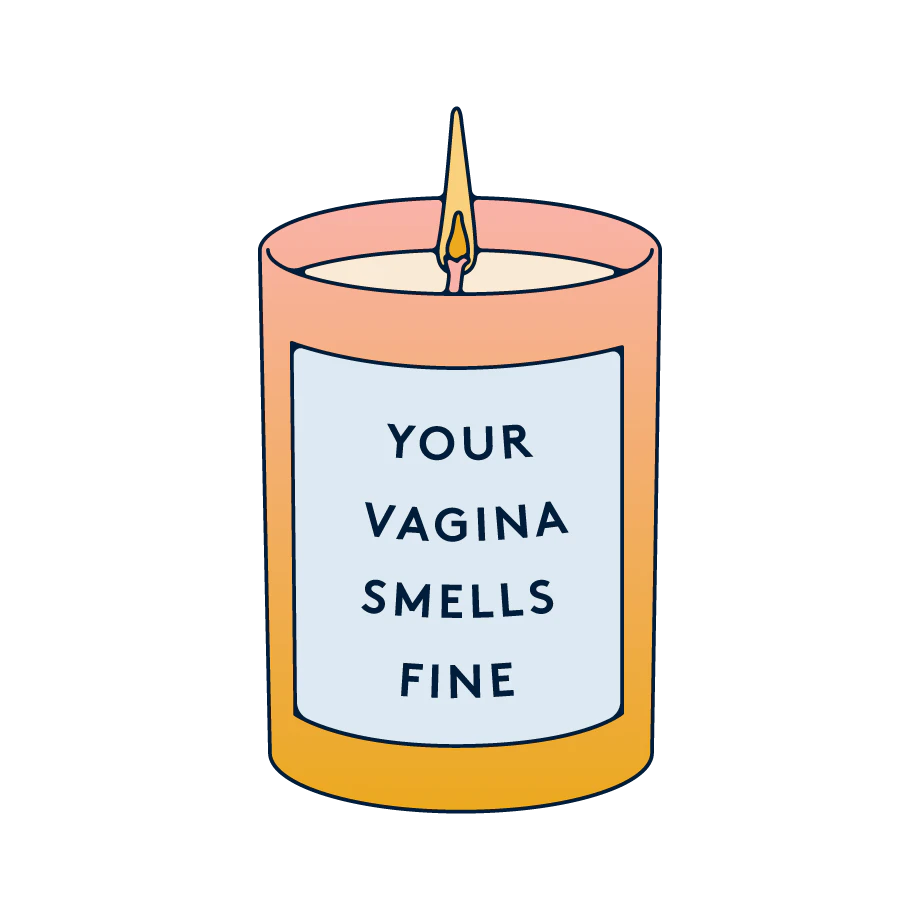
Your vagina should smell like a vagina. Discharge is normal. Scent is normal. A scent that changes throughout the month due to your menstrual cycle is also quite normal!
We hope that we’ve righted a few wrongs about vaginas. Importantly, we hope you’ll feel more comfortable talking about vaginal health going forward after reading this article. Genitalia stigma allows misinformation and shame to continue - let’s break the cycle. People with vaginas deserve to have spot-on information to better understand the workings of their bodies and how to take care of them.
A few refreshers: vaginas and vulvas are not the same, labia are not supposed to look like fleshless anatomical guides, hymens are not physical indicators of virginity, and vaginas are supposed to smell like… you guessed it, vaginas.