

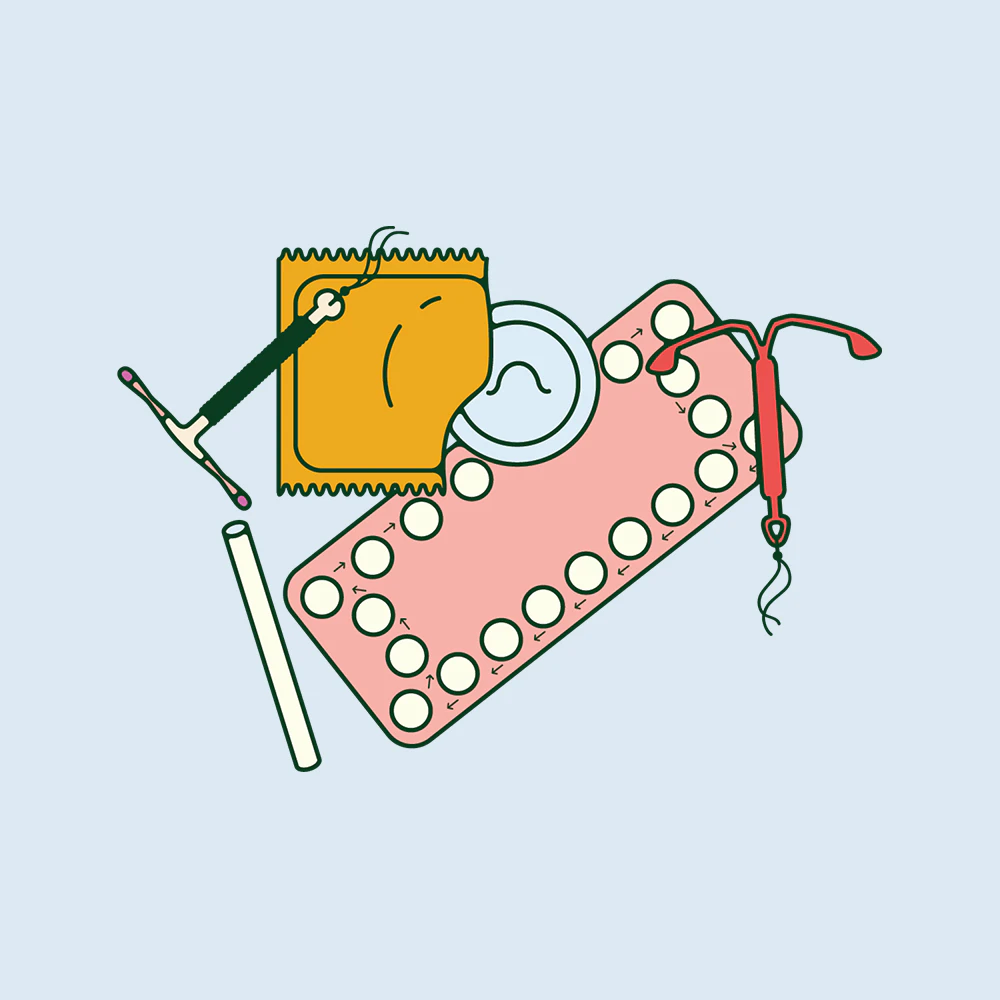
Many things can throw your cycle out of whack. Nutrition, exercise, and stress can all impact your period, but the biggest culprit is without a doubt contraception.
Different methods of contraception can impact your period in different ways, ranging from pain levels to a change in bleeding patterns. Some contraceptives can even stop your period altogether.
But how exactly does each method affect your cycle? With the help of The Lowdown – the world’s first review platform for contraceptives – we break down how each method of contraception may affect your monthly bleeds
Note: you’d think it’s an exact science, but contraception can affect women’s bodies in different ways, so take the information below with a pinch of salt!
Why does contraception affect your period?
One word: hormones. Hormonal contraceptives use synthetic versions of the reproductive hormones oestrogen and progesterone.
These are the hormones that affect ovulation and endometrium (the thing you shed when you’re on your period), hormonal contraception works by either preventing ovulation, thinning your uterine lining to prevent implantation, or both. This can reduce your menstrual bleeding, and for many people it eliminates it completely.
Combined oral contraceptive pill (COCP)
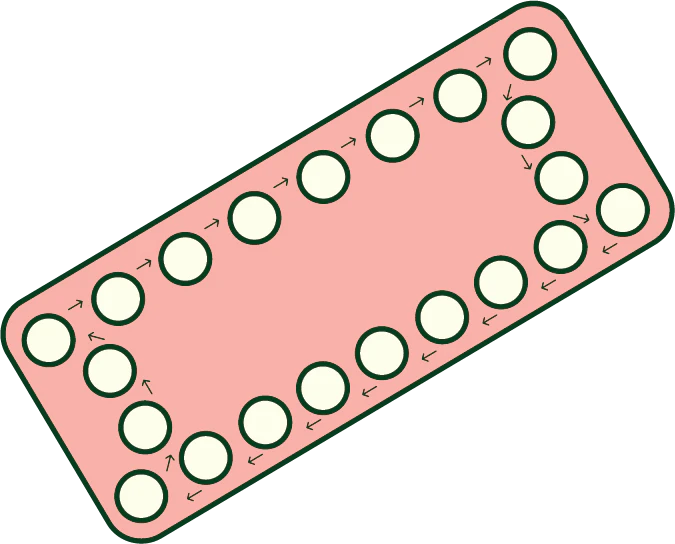
Most commonly referred to as “the pill”, the combined oral contraceptive pill (COCP) – most commonly referred to as “the pill” – contains synthetic versions of progestogen and oestrogen. The pill works by preventing ovulation and thickening your cervical mucus (which makes it harder for sperm to reach the egg) and thinning the endometrium.
The pill and your periods
The COCP is often prescribed as a treatment for endometriosis symptoms as it can make periods lighter and less painful. According to The Lowdown’s data, 53% of women who use the combined pill feel their bleeds have gotten lighter, while and 14% report spotting.
Since you don’t ovulate on the pill, you don’t have a “real” period. The bleed you experience when on the pill is a withdrawal bleed, and it happens when the hormones levels in your blood drop. If you’d rather not bleed at all, it’s completely safe not to avoid the withdrawal bleed by simply skipping the pill-free (or placebo) week and taking pill packs back to back.
So you don’t technically have a period at all when you’re on the COCP, but you do still bleed – if you want to.
You may experience some spotting or irregular bleeding the first three months that you take the pill, but after that your withdrawal bleeds should show up like clockwork and be lighter than what your periods were before.
Progestogen-only pill (POP)
The progestogen-only pill (POP), or mini pill, mainly works by thickening your cervical mucus, which prevents sperm from reaching an egg, and thinning the endometrium, so it’s less likely for a fertilised egg to implant. Some formulations of the mini pill also suppress ovulation.
The "mini pill" and your periods
When taking the mini pill, your periods may become irregular or stop altogether. Spotting in between periods is also common. In fact, spotting is one of the most common reasons why people stop taking the mini pill.
48% of Lowdown users who use the progestogen-only pill reported that their bleeding stopped altogether, while 23% reported spotting and 34% said their period become more irregular.
Hormonal coil (IUS)
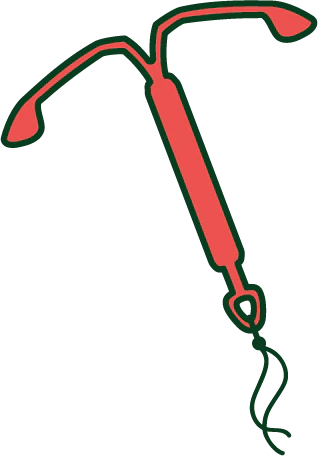
The hormonal IUS (which stands for intrauterine system), acts by releasing a low, daily dose of progestin, a synthetic version of progesterone.
Depending on the type of IUS, it can prevent pregnancy by thickening the cervical mucous to stop sperm from reaching the uterus, thins the endometrium to make implantation difficult, and sometimes suppresses ovulation.
The IUS and your period
Since the IUS thins the endometrium, two out of three users experience lighter bleeding within six months. Research indicates that it may be the most effective method of hormonal contraception for managing dysmenorrhea. In fact, a report showed that hormonal IUS decreased bleeding by more than 90% over the course of a year.
54% of women who reviewed the IUS at The Lowdown reported no bleeds at all. In fact, it’s the site’s highest-rated method in terms of overall satisfaction, with an average score of 3.6 out of 5.
Copper coil (IUD)
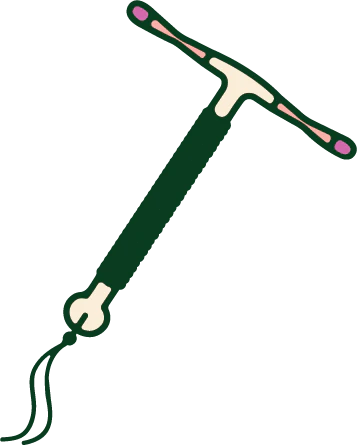
Although they look very similar, the copper coil (IUD) and hormonal coil (IUS) not only function very differently, but also have vastly different effects on your period.
The IUD (intrauterine device) works by releasing small doses of copper that alter your cervical mucus, making it more difficult for sperm to survive in your uterus. It can also stop a fertilised egg from implanting in the uterus, on the off chance a sperm managed to slip through.
IUDs and your period
Since the IUD doesn’t impact ovulation or your endometrium, you will still experience a monthly period. Although the frequency of your periods won’t be affected, many users report having much heavier, longer and even more painful periods when on IUD.
77% of Lowdown reviewers say their bleeds have got heavier, and 79% reported womb cramps (25% said these cramps impacted them a ‘great deal’). Researchers haven’t quite figured out why the IUD can make your periods heavier and more painful, but it’s worth keeping in mind if your flow is already quite heavy.
With both the copper IUD and hormonal IUS, there is a chance of spotting or bleeding for a few months after insertion.
Contraceptive implant and injection

The contraceptive implant (Nexplanon) and injection (Savana Press, Depo Provera and Noristerat) both contain a synthetic version of progesterone and act by preventing ovulation.
Implants, injections & your period
Irregular, unpredictable bleeding is very common with both methods. After a year of use, about half of users will have no periods. However, some users experience longer periods.
According to The Lowdown, 35% of users experienced spotting – while 56% reported irregular bleeding. With the contraceptive injection, 69% reported their bleeds stopped altogether (the highest of any method), and 16% noted that it took three to six months for their periods to go back to “normal” after they stopped taking the injection – something worth bearing in mind if you’d trying to conceive shortly after.
Contraceptive patch
Similarly to the combined pill, the contraceptive patch (Evra), contains synthetic versions of progestogen and oestrogen. The patch works by preventing ovulation, thickening your cervical mucus, and thinning the endometrium.
The contraceptive patch is applied once a week, every week for 21 days, followed by a four or seven day break.
The patch and your period
Just as with the combined pill, the seven day break is optional and can be skipped if you’d rather avoid a withdrawal bleed. So your monthly bleeds (should you wish to have them) will become more regular.
Similarly to the combined pill, you don’t ovulate on the contraceptive patch, which means your bleeding can become much lighter – 45% of the users on The Lowdown agree – and possibly less painful.
Vaginal ring
The contraceptive ring (NuvaRing) is a flexible, plastic ring that is placed inside the vagina and releases synthetic versions of oestrogen and progestogen. It works by preventing ovulation, thickening your cervical mucus, and thinning your endometrium.
Vaginal rings and your period
Since the vaginal ring stops you from ovulating, you won’t have a “real” period but rather a withdrawal bleed, which is typically lighter than a period. 76% of The Lowdown users experienced lighter bleeds with the vaginal ring.
The ring is worn for 21 days, then removed for four or seven days, where you will experience a withdrawal bleed. As with the combined contraceptive pill and patch, you can skip the no-ring break and avoid a withdrawal bleed.
TL;DR
- Each method of contraception can affect your period, depending on what hormones they contain and how they function.
- Irregular bleeding and spotting is a common, temporary side effect with many forms of contraception. This usually improves over time.
- With the pill, patch and vaginal ring, you’ll likely continue to experience a monthly bleed that mimics your period (unless you use them continuously).
- With the IUS, injection, and the implant, it’s possible for your periods to stop altogether.
- The IUD is known for making periods heavier and more painful, but it’s unclear why. The IUD is also the only non-hormonal form of contraception known to impact your menstrual cycle.
Head to The Lowdown to learn more about your contraceptive options – and leave a short anonymous review to help other womxn find the right method for them.